The first piece of art history to cover is the MASTABAS. A mastaba is an individual layer of a step-pyramid. The first Egyptian to build structures was Imhotep, one of THOSE guys that felt they had to put their name on everything they do.
One example of mastabas is the Saqqara. It's facade was made out of pretty, shiny limestone! :)
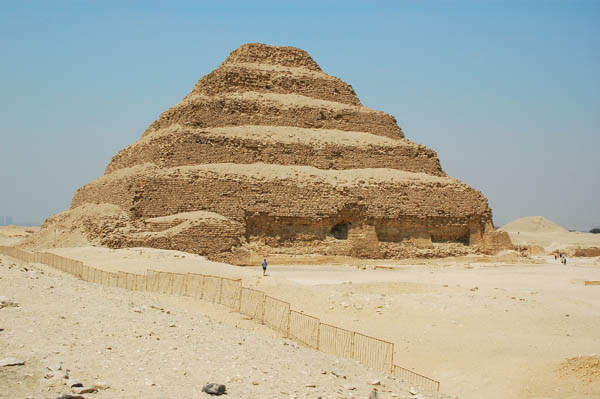
Photo found here
The two most note worthy things at Giza (sorry Khafre and Menkaure) are Khufu's pyramid and the Sphinx. Khufu's pyramid is the tallest at Giza with a base of 755 ft lengthwise. Talk about having a big ego.
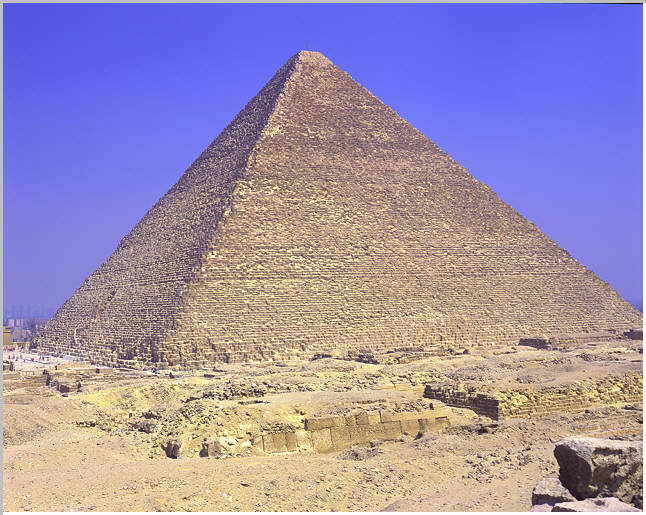
Photo found here
The Sphinx at Giza is one of the more well known sphinxes for it's location at Giza as well as a myth of Napoleon shooting its nose off (which is sadly untrue). Sphinxes had the head of a man and a body of a lion which were meant to be guardians that never slept. I guess the phrase "I'm so tired I feel like my face'll fall off" actually applies here.

Photo found here
Next is the Abu Simbel. Ramses II wanted to create a monument to his wife in the side of a mountain... se he made giant structures of himself. See if you can find the tiny people beside his leg and you'll find his wife.
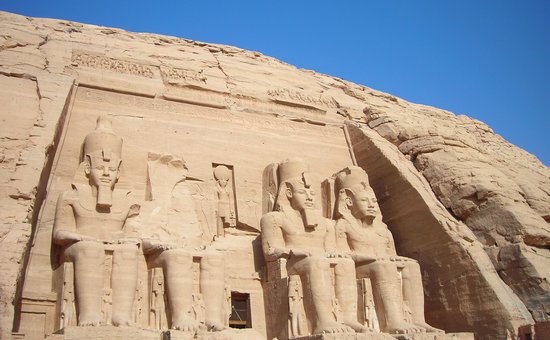
Photo found here
The Colossi of Memnon are great statues which use to make moaning sounds at dusk and dawn to "greet his mother the dawn goddess." Sadly they've fallen silent due to a Roman emperor in 200 AD who "fixed them." Way to go Septimius Severus.

Photo found here
The last two important pieces of Egyptian art history include the Rosetta Stone and King Tut's tomb.
Rosetta Stone is a wonderful language program meant to help a person learn a language faster... it's also a rock. Perhaps one of the most important historical relic, this stone holds the importance of cracking the language barrier between modern English and Ancient Egyptian.

Photo found here
And finally, the tomb of King Tutankhamen. The elegantly preserved tomb of the brat pharaoh. The eighteen year old king famous only for what he had (nothing like the celebrities of today).

Photo found here
So, this was another part of art history. I hope you enjoyed and if you didn't, oh well.

hey Reed.... do you remember the king tut song from sixth grade? I was going to ellaborate more on that song, but I really don't know what to say about it. So.... fun jive and good times!!!
ReplyDeletehey Reed... Do you remember that king tut song from sixth grade? Yea... I was gonna ellaborate more on that song, but I don't really know what to say about it. So... Fun jive and good times!!!
ReplyDeleteLove it. Give me more information about the significance of the Rosetta Stone.
ReplyDelete