Photo found here
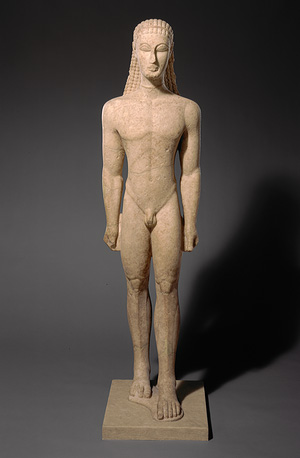
The Kritios Boy, dated to 480 BC, is a major improvement from the Egyptian influenced sculptures. Standing in contapposto, or counter-pose, this sculpture captures a more realistic and relaxed pose with his weight shifted to one leg.

Photo found here
The Three Goddesses, dated to 435 BC, literally lost their heads celebrating the birth of Athena. Part of the frieze on the pediment, or triangular area of the facade, of the Parthenon, these figures not only were complete, they were also brilliantly painted.

Photo found here
The Dying Gaul, dated to 230-220 BC, is not actually a Greek statue per say. Rather, this is a nearly perfect copy of a Greek statue by the Romans. Due to this copy, we can know some of the statues that the Greeks created even though they may not have stood the test of time. The Romans are a credit to history for copying others. Why can't modern students?
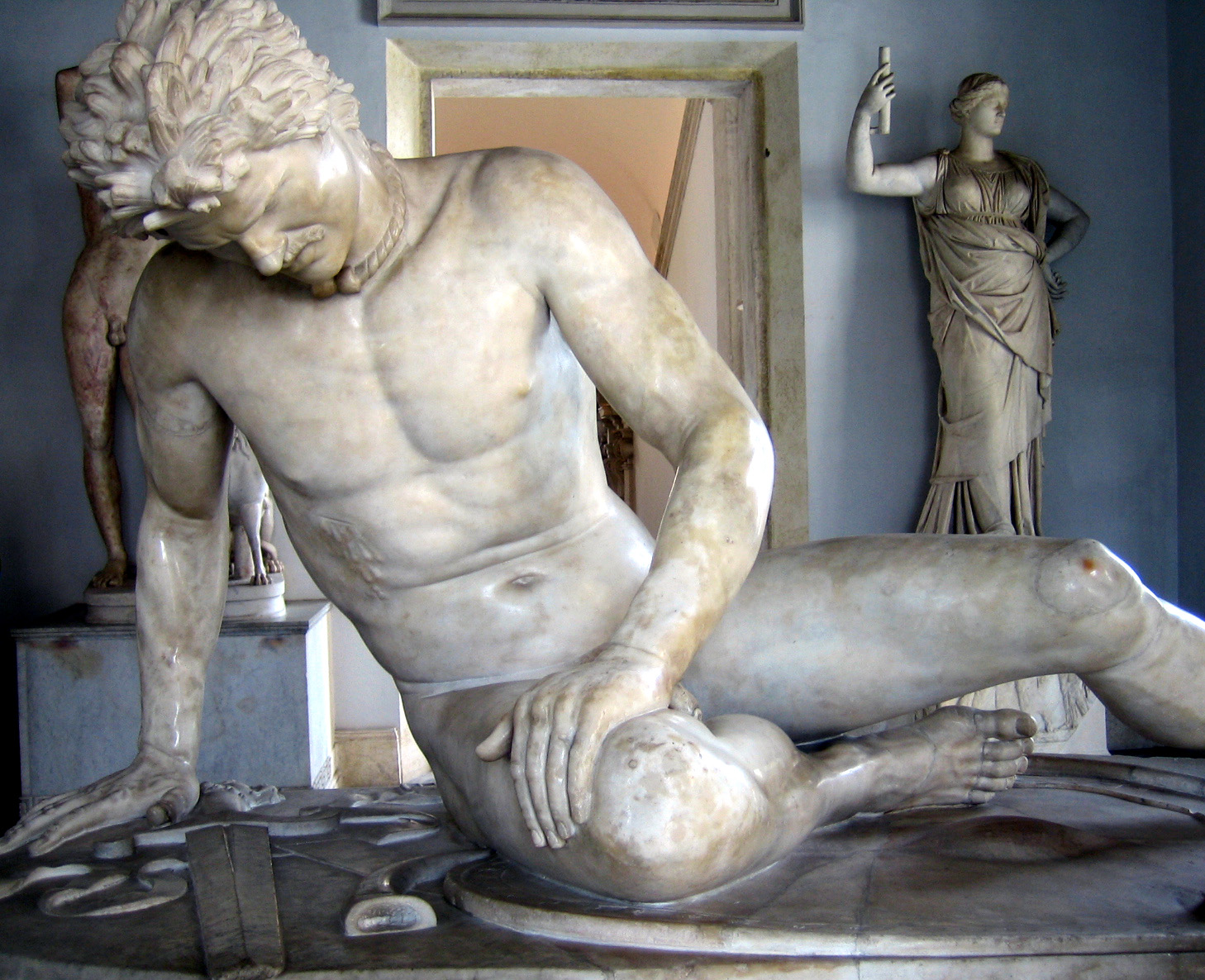
Photo found here
Nike of Samothrace, dated to 200 BC, shows Winged Victory land on the bow of a ship. While the statue no longer has arms, it is known from records that she was calling out victory. Most of the time periods statue arms seem to have flown the coop.

Photo found here
The Porch of the Maidens, dated to 421-405 BC, was a group of caryatids, female figures which replaced the columns of a building, found in the Erechtheum. And we think our society puts a lot of weight on women's shoulders.

Photo found here
The Parthenon, dated to 448- 432 BC, is Doric in style and has rather interesting proportions. First, there are no straight lines within the construction, including the floors. From bulbous columns to a curved floor, either someone deliberately was playing with the eye or they was someone drunk in the drawing room.
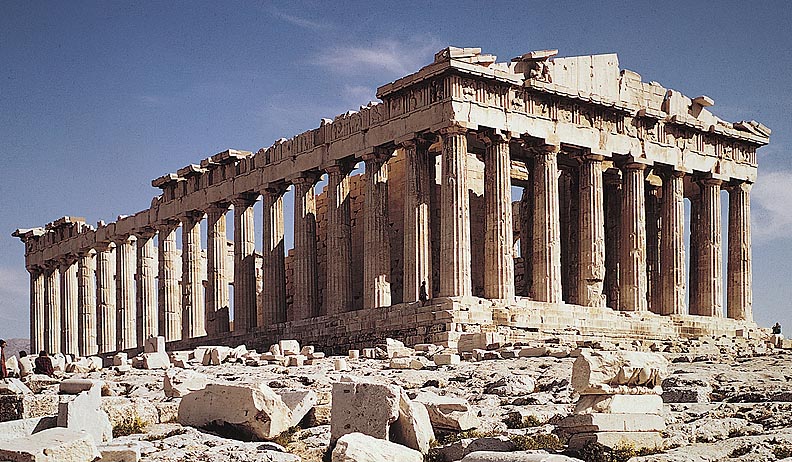
Photo found here

This Amphora, a large storage jar with two handles, is dated to 530 BC. It depicts the invincible Achilles and the mighty Ajax as they are locked in deadly combat... of Morra... a board game... bored definitely describes this game.
Photo from here

The Peloponnesian War, 431-404 BC, was a war that stripped Greece of its luster. Literally. The statue of Athena which rested in the Parthenon was once covered in a gold layer. But, in order to fund the war effort, the statue was stripped of her outer clothing. Some women today are completely plastered with makeup, but that doesn't even compete with what Athena use to look like:
Photo found here
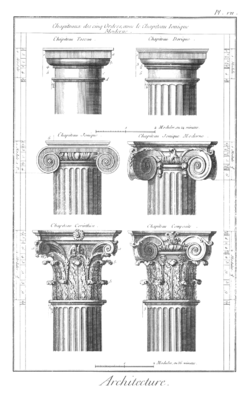
Out of everything that the Greeks provided modern art, perhaps the most important thing is the three orders of architecture. Everyone should know that there are three different columns: Doric, Ionic, and Corinthian. The Romans aren't the only people that like to copy others.
Photo found here
So, this was yet another part of art history. I hope you enjoyed and if you didn't, oh well. Bless your face.

Just to be that obnoxious, technical guy that everything hates, the caryatids in your picture do not the weight put on their shoulders, but their heads.....hahahahahahahahahaha (that's jajajajajajajaja for all those that speak Espanglish). Just kidding... calm down Reed. Geesh... kids these days! Can I have that giant spear of solid gold, I can think of a few I'd use it on.
ReplyDelete